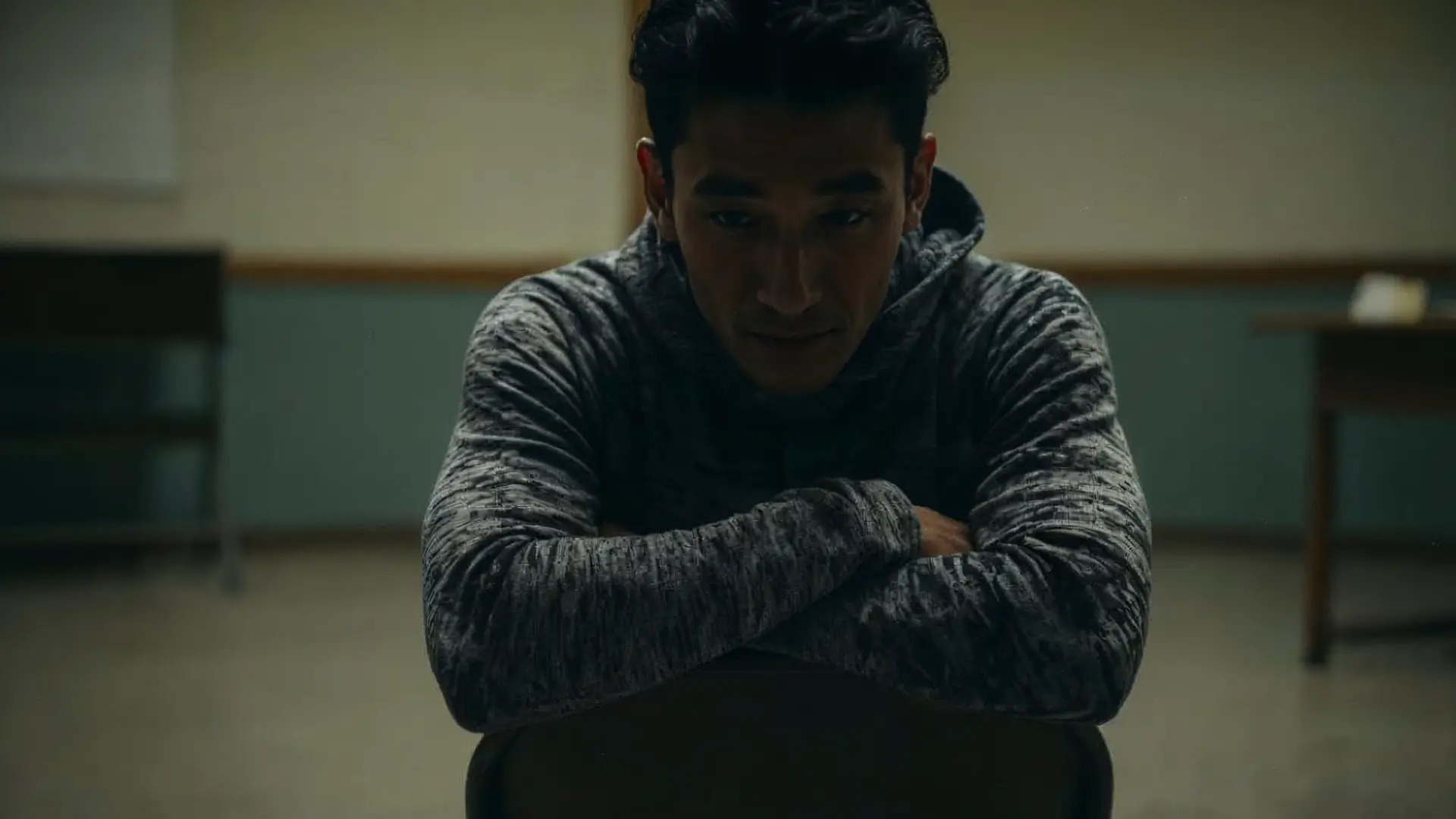
Grounded
restrained and humane
After losing the powers that once made him indispensable, a former superhero retreats into anonymity. He is forced to confront how much of his identity was built on rescuing others. Through uncomfortable encounters and small acts of service, he learns how to matter without control.
Story
Marcus Chen used to catch planes out of the sky. He remembers the first one, a 737 coming into LaGuardia with one engine out and smoke trailing black against the winter sky. He got underneath and pushed, his hands sinking through metal like it was water until he felt the frame itself, and then he bore it up. The passengers never knew. The pilot reported a miraculous recovery of hydraulics. Marcus landed on a rooftop in Queens and threw up for twenty minutes.
That was eleven years ago. He was twenty-three. They called him Meridian because he could be anywhere instantly, because he existed at the intersection of impossible and necessary. He wore dark blue and silver. He operated mostly out of New York and Philadelphia, though he went wherever the crisis took him. He dated a photographer named Vanessa Liu who kept trying to take his picture when he wasn't looking, trying to catch what he looked like when he thought no one was watching. She never could.
The last time he flew was to stop Rebecca Torres from jumping off a parking structure in downtown Philadelphia. He reached her just as she stepped off, caught her mid-air, brought her back to the roof. She looked at him with something beyond fury. "You don't get to decide," she said. He tried to explain that he was helping, that he could see she was in pain, that he knew what she needed. She spat in his face. Two security guards came running. By the time he'd tried to make them understand that he'd saved her, Rebecca was gone.
His powers vanished three days later. He woke up and knew immediately, the way you know when a tooth finally falls out. The constant hum of potential beneath his skin had gone silent. He tried to lift his nightstand. It didn't budge. He tried to phase through his bathroom door and broke his nose.
That was eight months ago. He moved to Salt Lake City two weeks later, somewhere he'd never operated, somewhere no one would recognize his shape against the sky. Somewhere he could be invisible in the particular way you can only be invisible when you look nothing like what people expect to see. Vanessa tried to come with him. She packed a bag and stood in the apartment they'd shared for three years and said she wanted to help him through this. He told her no. He told her he needed to do this alone. What he meant was that he couldn't stand her watching him be ordinary. What he meant was that he was terrified she'd stayed all those years for Meridian, not for Marcus, and now he'd find out for certain.
She came anyway. She found an apartment ten minutes from his, got freelance work shooting for the Deseret News and local magazines. She showed up at his door every few days with groceries or takeout or just to sit with him while he stared at the television. She stayed for four months. He kept trying to fix her sadness about his condition, anticipate what she needed before she could ask for it, save her from having to save him. One night she stood in his doorway and said, "I'm not leaving because you lost your powers. I'm leaving because you still think you know what I need better than I do."
She moved out the next week. She stayed in Salt Lake City, which somehow made it worse.
Now he sits in a basement room at the Cottonwood Heights Community Center every Thursday at seven, drinking coffee that tastes like someone's memory of coffee, listening to people talk about their problems. The support group is called Moving Forward, which Marcus finds darkly funny given that he can barely get out of bed most mornings. The facilitator is a woman named Joan who has aggressively kind eyes and asks questions like she's defusing bombs.
There are usually eight or nine people. Tom talks about his divorce the way other people describe natural disasters. Angela's son is in prison. Martin just got out. They all know Marcus used to be Meridian. He made the mistake of introducing himself with his real name the first week, and Tom recognized him from the news. Now they treat him with the careful distance you'd give someone who used to be famous, someone whose famous-ness is itself a kind of wound.
The person who bothers him most is David Kline.
David started coming five weeks ago. He's in his mid-forties, soft around the middle, with gray in his beard and glasses he's always adjusting. He wears cardigans. He talks about losing his job, about his mother's declining health, about feeling invisible. He has a nervous laugh that makes Marcus want to put his fist through a wall.
Marcus knows exactly who David Kline is.
Fifteen years ago, David called himself Fracture. He could split reality, open gaps in space that sent objects or people somewhere else. Nowhere good. Fracture robbed banks by disappearing into walls. He once sent an entire city block into a pocket dimension for six hours. When Meridian finally stopped him, it took everything Marcus had. They fought across downtown Philadelphia for three hours. Marcus remembers David's face through the mask, the way he smiled like the whole thing was a joke Marcus wasn't smart enough to understand.
David served nine years. Got out two years ago. He's been working at a FedEx, he told the group. His mother has dementia. He's living in her house in West Jordan, taking care of her. He doesn't have his powers anymore either. Lost them in prison, he said, like they just evaporated. "Maybe I didn't deserve them," he said during his second meeting, and Marcus had to leave the room.
Now they sit across from each other every Thursday and pretend they don't have history.
Joan is talking about acceptance tonight. About how moving forward doesn't mean forgetting what happened, but it means not letting what happened make all your decisions for you. Marcus watches David nod along like this applies to him, like he gets to sit here and be a victim of his own choices.
"Marcus," Joan says. "You're quiet tonight."
Everyone looks at him. Marcus drinks cold coffee. "I'm fine."
"We've talked before about how 'fine' often means we're holding something back."
Marcus looks at David. David looks at his hands.
"I saw someone from my past this week," Marcus says. "Someone I hurt."
This is true. He ran into Vanessa at a coffee shop on Monday. She was with someone, a tall woman with short hair who touched Vanessa's shoulder when she laughed. Vanessa saw Marcus and her face did something complicated. She came over. They talked for four minutes. She asked how he was. He said fine. She said she was glad he was okay, and looked like she meant it. The woman with short hair waited patiently. Vanessa left. Marcus sat in his car for an hour.
"What happened?" Joan asks.
"I tried to save her. But she didn't need saving. I just couldn't see that the thing hurting her was me."
Tom nods knowingly. Angela makes a sympathetic sound. David is very still.
"That sucks," Joan says.
"I thought I could see things other people couldn't," Marcus says. He's looking at David now. "I thought having power meant I understood what people needed. But I was just scared. I was terrified that if I stopped moving, stopped fixing things, stopped being necessary, I'd disappear."
David's jaw tightens.
"I made everything about me. Every problem was something I had to solve. Every person in pain was someone I had to rescue. And the thing is, I called it being a hero. I called it caring. But really I was just using other people's crises to convince myself I mattered."
"That's very brave to acknowledge," Joan says gently.
"Is it? Or is it just another way of making everything about me? Look at me, recognizing my flaws. Look how self-aware I am. Give me credit for admitting I was wrong."
The room is quiet. Outside, someone is moving chairs in the gymnasium above them. The sound echoes.
"I think," David says, and everyone turns, because David never volunteers, "that sometimes we do terrible things because we're in pain. And we tell ourselves stories about why it was necessary. Why we had to. Why anyone would have done the same."
Marcus watches him.
"And maybe that's true to some extent. Maybe pain does make us do things we wouldn't otherwise do. But at some point you have to stop using your pain as an explanation. You have to just say, I did that. I hurt people. I'm sorry. And then you have to figure out how to be a person who doesn't do that anymore."
His voice is shaking. Joan is leaning forward.
"I used to think the world owed me something. I thought I'd been dealt a bad hand and that gave me permission to burn everything down. I had these abilities and instead of asking what I could do with them, I asked what they could do for me. I hurt a lot of people. I scared a lot of people. And I told myself it was because society was corrupt, because the system was broken, because people in power were hypocrites. And maybe that was all true. But it was also just an excuse. I was angry and I wanted everyone else to feel as bad as I did."
He takes off his glasses and cleans them with his sleeve. Without them his face looks naked, younger.
"I'm trying to be different now. I don't know if it matters. I don't know if you can ever really make up for the things you've done. But I'm trying to just be present. To take care of my mom. To show up for people in small ways. To not need to be special. I think that's harder, honestly. Being ordinary. Not having a mission. Just being someone who exists and tries not to make things worse."
He puts his glasses back on. He looks at Marcus.
"I think if I could go back, I'd want to tell myself that the opposite of villain isn't hero. It's just person. Someone who doesn't need the story to be about them to know they matter."
Marcus feels something crack open in his chest.
After the meeting, David catches him in the parking lot. The October air is sharp and the mountains are dark shapes against darker sky. Marcus turns and they look at each other. Up close David looks tired in a way that goes deeper than sleep.
"I know you know who I am," David says.
"Yeah."
"I've known since the first time I saw you here. I thought about leaving. But I needed this. And I thought, maybe you need it too."
Marcus doesn't say anything.
"I'm sorry. For what I did. For what I made you do. For the people I hurt."
"You hurt a lot of people."
"I know."
"You sent that city block to wherever you sent it. There were kids in there. They were gone for six hours. Do you understand what that did to their parents?"
"Yes," David says quietly.
"Do you?"
"I was there when they came out. Did you know that? I stayed, hidden, watching. I saw their faces. I heard them crying. And I felt nothing. That's the part that scares me most. Not that I did it. That I felt nothing when I saw what I'd done."
Marcus's hands are fists in his pockets.
"I can't undo it. I can't give you anything that makes it even. All I can do is try to be someone different. And I know that's not enough. I know it will never be enough. But it's all I have."
They stand in the cold. A car pulls out of the lot, headlights sweeping across them.
"Why did you do it?" Marcus asks. "Really."
David thinks about this. "I wanted someone to see me. I wanted to be significant. I wanted to force the world to acknowledge I existed. And the only way I could think to do that was to break things."
Marcus understands this more than he wants to.
"The thing I'm trying to figure out is how to matter without making everything about mattering. How to just be useful in quiet ways. My mom doesn't know who I am most days. But I can still make her tea the way she likes it. I can still sit with her. That doesn't make me special. But maybe it makes me human."
He looks at Marcus like he's asking a question.
"I don't know if I forgive you," Marcus says.
"I'm not asking you to."
"But I think I understand why you're here."
David nods. He starts to turn away, then stops. "For what it's worth, I think you were trying. I think you actually believed you were helping. I never believed that. I knew I was destroying things. You thought you were saving them. I don't know which one is worse."
"I think mine might be."
"Yeah," David says. "Maybe."
He walks to his car. Marcus watches him go.
That night Marcus can't sleep. He keeps thinking about Rebecca Torres. About Vanessa. About all the people he decided he knew better than they knew themselves. About how he called it love. Called it responsibility. Called it duty. How he never once asked what they actually needed. How he never once considered that what they needed might be for him to stop.
He thinks about David's mother, who doesn't know who her son is but who drinks the tea he makes her. About how David shows up every day to be present for someone who can't recognize him. About how there's no glory in it, no validation, no story. Just the act itself.
He thinks about Vanessa packing that bag, getting on a plane to a city where she knew no one, finding an apartment, building a life, all because she wanted to be there for him. And how he spent those four months treating her presence like a problem to solve instead of a gift to receive. How he kept trying to manage her disappointment, orchestrate her hope, engineer her comfort. How he never once just let her sit with him in his grief. How he never once trusted that she could choose to love an ordinary man without that choice being something he had to justify or earn or protect her from making.
Around three in the morning Marcus gets up and writes in his journal. He writes what he would say to Rebecca if he could. That he's sorry for not listening when she told him he didn't get to decide. That he's sorry for making her crisis about his need to be necessary. That saving her life and respecting her autonomy weren't mutually exclusive. He could have caught her and then actually heard what she was saying instead of assuming he understood. He hopes she found real help, the kind she chose for herself. He doesn't know where she is now or how to reach her. But writing it down matters anyway.
Then he opens his email. He types Vanessa's name in the address field. He stares at the empty space for twenty minutes. Finally he writes, "I'm sorry I couldn't let you love me the way you wanted to. I'm sorry I kept trying to save you from choosing to stay. I'm learning how to just be here. I hope you're well."
He sends it. He doesn't know if she'll respond. He doesn't need her to.
Over the next few weeks, Marcus starts volunteering at a food bank three blocks from his apartment. He shows up on Tuesday and Saturday mornings. He unpacks boxes, stocks shelves, helps people carry groceries to their cars. No one knows who he used to be.
There's a woman named Patricia who comes in every week with her two kids. She works night shifts, always looks exhausted. Marcus helps her load her car one Saturday and she asks if he can show her son how to tie his shoes. The boy is five and struggling with it. Marcus kneels on the parking lot asphalt and shows him the loop method. The boy concentrates so hard his tongue pokes out. When he gets it, he looks up with pure delight. Patricia's face softens in a way that makes Marcus's throat tight.
"Thank you," she says.
It's not flying. It's not catching planes. But the boy wears shoes that stay tied, and his mother has one less thing to worry about, and Marcus was there when it mattered.
David keeps coming to group. They don't talk much outside the meetings but they've started nodding to each other in the parking lot. One Thursday Martin brings donuts and David takes a maple bar and Marcus takes the last chocolate one and they stand in the hallway eating them before Joan starts the session. David tells Marcus his mother had a good day yesterday, recognized him for almost an hour. Marcus says that's good. David says yeah, it really is.
Angela asks Marcus one week if he misses it. His old life. His powers. Being Meridian.
"I miss feeling certain. I miss thinking I knew what people needed. But I don't miss being that person. That person was using everyone around him as proof he deserved to exist."
"And now?" Joan asks.
"Now I'm just trying to show up. I'm trying to be present without needing it to mean something. I'm trying to help when I'm asked and step back when I'm not. I'm trying to be someone who doesn't need to be exceptional to feel like I matter."
"How's that going?" Tom asks.
Marcus thinks about Patricia's son. About David's face when he talked about his mother having a good day. About the emails he sent that neither Rebecca nor Vanessa has answered and maybe neither will and how that has to be okay.
"I think I'm learning how to be ordinary. And I think that might be the hardest thing I've ever done. And maybe the most important."
Joan smiles. David is watching him with something like recognition.
Three weeks later Marcus is at the grocery store when his phone buzzes. He's in the produce section, trying to remember if he needs onions. The message is from Vanessa.
"I got your email. Thank you for saying that. I'm doing well. I hope you are too. Maybe we could get coffee sometime. No pressure."
Marcus reads it three times. His hands are shaking slightly. He types back, "I'd like that," and sends it before he can overthink it. Then he adds, "I'm still learning. But I'm trying."
She responds almost immediately. "I know. That's why I said yes."
Marcus stands in the produce section holding his phone. A woman reaches past him for cilantro. He steps aside and apologizes. She smiles and says no problem. He puts the phone in his pocket. He decides he does need onions. He gets two.
After the meeting that Thursday, Marcus catches David in the parking lot. The November air is cold and the mountains are sharp against the dark sky.
"I wanted to tell you something," Marcus says.
David turns, adjusts his glasses.
"I've been thinking about what you said. About the opposite of villain not being hero. About just being a person."
David waits.
"I think I came here because I thought I could disappear. I thought I could be invisible. But the thing is, I'm still trying to control the narrative. I'm still trying to decide what story people tell about me. Even choosing to disappear is a kind of performance."
"What changed?" David asks.
"I'm starting to understand that being a person means letting other people see you as you are. Not as you want to be seen. Not as you think you should be seen. Just as you are. And that's terrifying. But I think it's the only way to actually be present."
David nods slowly. "My mom called me by my name yesterday. First time in two months. She looked right at me and said, David, could you make me some tea. And I just stood there crying like an idiot while the kettle boiled."
Marcus's throat tightens.
"She forgot again an hour later. But for that hour I was just her son. Not Fracture. Not an ex-convict. Not someone trying to make up for what he did. Just David. Her kid. The person who makes her tea."
"That's good," Marcus says.
"Yeah. It really is."
They stand in the cold. A few other group members walk past, waving goodnight. Marcus waves back.
"I'm having coffee with my ex this weekend. I don't know what's going to happen. Probably nothing. But I'm going to try to just be there. Just listen. Just let her see me without trying to fix anything."
"That's brave," David says.
"Or stupid."
"Maybe both. But I think that's what being human is. Doing things that scare you because they matter, not because they make you special."
Marcus nods. David starts toward his car, then stops.
"For what it's worth, I think you're doing good. Not good as in heroic. Good as in real."
"Thanks."
"See you Thursday."
"See you Thursday."
Marcus drives home. The city spreads out below him as he climbs into the foothills, lights everywhere, people living their lives, no one needing him to save them. He used to fly over cities like this and feel responsible for every single light. Now he drives past them and feels something different. Not responsibility. Not guilt. Just presence. Just the fact of being here, in this place, at this time, one person among many.
He parks in his building's lot, carries his groceries up two flights of stairs. His neighbor Frank is struggling with his door, hands full of mail. Marcus holds the mail while Frank unlocks the door. Frank thanks him. Marcus says no problem. Frank asks how he's doing. Marcus says good, actually, and means it.
Inside his apartment Marcus puts away his groceries, makes dinner, eats at his small table by the window. Outside the mountains are dark shapes against darker sky. He used to fly over those mountains. Now he looks at them from ground level and they're still beautiful. Maybe more beautiful. He can see the details now. The way the light catches the snow. The shadows in the valleys. The particular shape of the ridge against the stars.
His phone buzzes. It's Vanessa. "Sunday at 10? There's a place near Liberty Park."
He types back. "I'll be there."
She sends a coffee emoji. He puts the phone down, does the dishes, makes tea. He sits by the window and drinks it while the city glows below him.
Tomorrow he'll wake up and go to work and volunteer at the food bank on Saturday and have coffee with Vanessa on Sunday and come to group on Thursday. He'll show up for the small things. He'll be present without needing it to be monumental. He'll exist without requiring the world to validate that existence.
He'll be human. Completely human. Present for the small moments that matter. Kind without needing recognition. Helpful without needing to be necessary.
He's learning that this is its own kind of heroism. The kind that doesn't wear a cape or make the news. The kind that shows up anyway. The kind that ties a kid's shoes in a parking lot. The kind that makes tea for someone who won't remember. The kind that sits across from your former enemy and sees a person trying.
Maybe that's not just being human. Maybe this is what a hero actually looks like.
And maybe, eventually, that will be enough. Maybe it already is.